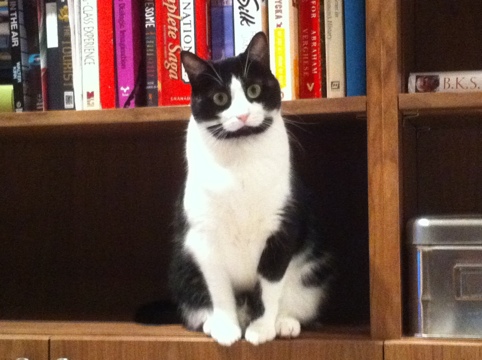
Sunny kurz vor dem Sprung

a personal blog about technology, communications and other stuff that interests me
Seit zehn Jahren habe ich Fotos fuer Freunde und Familie ins Netz gestellt, und dafuer einige Seiten mir verschiedenem Design erstellt. Vor einer Weile habe ich damit begonnen, die Fotos dieser Seiten in einem neuen Blog zusammenzubringen. Ich hatte erst ueberlegt, die alten Fotogallerien hier auf martinhofmann.net zu integrieren.
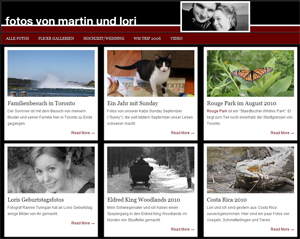 Aber dann habe ich dafuer ein neues und separates WordPress blog benutzt, weil es einfacher war. Es ist noch in Bearbeitung, aber es geht voran. I mag das neue Layout, das auf einer Vorlage von StudioPress basiert und dem Ganzen ein einheitliches Design gibt.
Es hat Spass gemacht, in den alten HTML-Seiten mit meinen verschiedenen Amateur-Designs zu stoebern. So sehr ich die Fotos fuer Lori, meine Freunde und meine Familie eingestellt habe, es hat auch auch Spass gemacht, mit HTML herumzuspielen.
Das neue Fotoblog laesst sich durch einen Klick auf das Bild oder hier erreichen.
I’ve been putting up photos for friends and family for the past decade, and created a number of differently designed pages for them over the years. A while ago I started to work on bringing the photos together in a new photoblog. I had first considered adding the old photo galleries to martinhofmann.net here.
But then I decided to organize all the old photos in a new, separate WordPress blog with a gallery plug-in and a nice overview homepage. I will continue to use if for new photo galleries but keep the actual blogging here. The photoblog is still a bit of a work in progress but it’s getting there. I like the layout from the StudioPress template that gives it all a consistent look & feel.
It was fun to go through all the old HTML-pages with my different amateur design approaches. As much as I posted the photos for Lori, my friends and family to see, half the fun was definitely in fiddling around with HTML.
Click on the image of the screenshot with the new design or here to go to the new photoblog.

 After 15 years of working in the agency world, I am joining the Ontario Ministry of the Environment in a communications role.
Leaving High Road is tough. It’s a special place. I have a lot to be thankful for, and a lot of colleagues, clients and partners to thank. My seven and a half years at High Road were full of change and growth. The agency tripled in size, expanded from three to five offices, and won big Canadian brands and interesting U.S. clients. During that same time, digital technologies and social platforms have added new ways for people to communicate, connect and search for information. High Road has trained, hired and acquired to stay ahead of these developments and make sure the right skill sets are in place to help clients benefit from them.
What has stayed consistent throughout all the change is a corporate culture that combines leadership with team work, risk-taking with sound advice, and entrepreneurship with fun. I am lucky to have benefited from it; I learned a lot from High Roaders. Another thing that won’t change: the fact that High Road is an agency. This is why I have decided to make a move. I started my career in the public sector (on a different continent), and always considered it something worth revisiting. Well, now is the time.
I love that governments are increasingly going digital to communicate or seek input. For example, Canada recently let people and organizations submit and vote on ideas for its Digital Economy Strategy; Germany’s chancellor and some ministers are answering citizen’s questions using “many-to-one communications” platform DirektZu.de; the U.S. Department of State in 2007 launched its DipNote blog and added other social media services over time. A lot is already happening across the world, and we need more of that. I want to contribute to it here in Ontario. But it’s not simply about choosing new ways over old. It’s about looking at all aspects of communication, and choosing the smartest ways to inform and interact. Digital, social and mobile ideas can play a big role here.
Yet, my best personal experience with government communications is still a handshake. When I arrived in Canada ten years ago, I was greeted at immigration with an extended hand and the words “welcome to Canada; glad to have you here.” Whether it was based on a customs officer’s individual effort or official guidance, I don’t know. What matters to me is that the welcome handshake made me both feel excited about my future in a new country and think about my responsibilities as a new resident.
It was a simple, powerful act of government communication. As a public relations professional, I always thought it is an example of something to aspire to. Granted, interaction between government and citizens is usually more complex and less heart-warming. But I’ll carry the spirit of the handshake and the passion for new ideas with me when I start my next job on Monday at the Government of Ontario. I can’t wait to meet my new team and get going.
If you have suggestions or examples of great government communications, I’d love to hear from you.
Ariel Magnus hat Recht.
Spiegel: Wenn Sie sich die aktuelle deutsche Integrationsdebatte anschauen: Was erzählt sie Ihnen über die Deutschen?
Ariel Magnus: Sie schaffen sich ein Problem, wo keines ist. Wir leben in Gesellschaften, in denen es viele verschiedene Leute gibt mit vielen verschiedenen Herkünften. Wer das als Problem sieht, begeht schon den ersten Fehler, denn die Vielfalt ist kein Problem, das einer Lösung bedarf, sondern schlicht die Realität, in der wir leben.
Der argentinische Schriftsteller Ariel Magnus im Interview mit Der Spiegel.
Enjoyed spending a couple hours away from my desk at the Word on the Street festival at Queen’s Park in Toronto. Great to see that literature is still such a draw, and how many different independent magazines and publishers are out there.
Sony and Kobo used the occasion to show off their e-readers. Smart move. In a couple years people might all be bringing their Kobos, Kindles and iPads to the festival, and download the latest books directly in the publishers’ tents. And people will line up for authors to do e-signings of their e-books after the readings? Maybe not.
Strange: I switched from newspapers to online news without hesitation, and embraced blogs and social media early on. But I am very attached to printed books. I was given a Kobo earlier this year, and I do use it – but almost exclusively for business books. Novels, stories and poems I still like to read on paper. It will be interesting to see if/when/how my reading habits will change over time. I hope both worlds will co-exist for a while. Can’t imagine giving up printed books. Life is much better with book stores like Ben MacNally Books and The Sleuth of Baker Street.
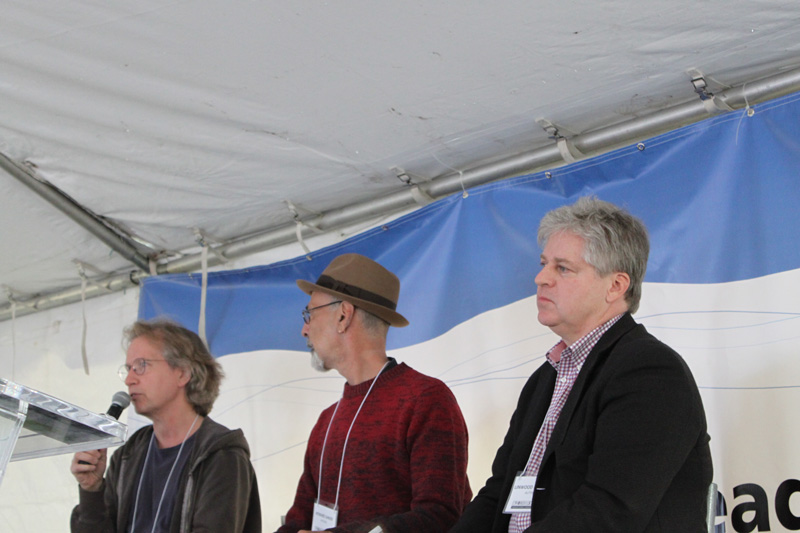
Canadian authors Giles Blunt, Howard Shrier and Linwood Barclay during the “World of Crime” readings and audience discussion.
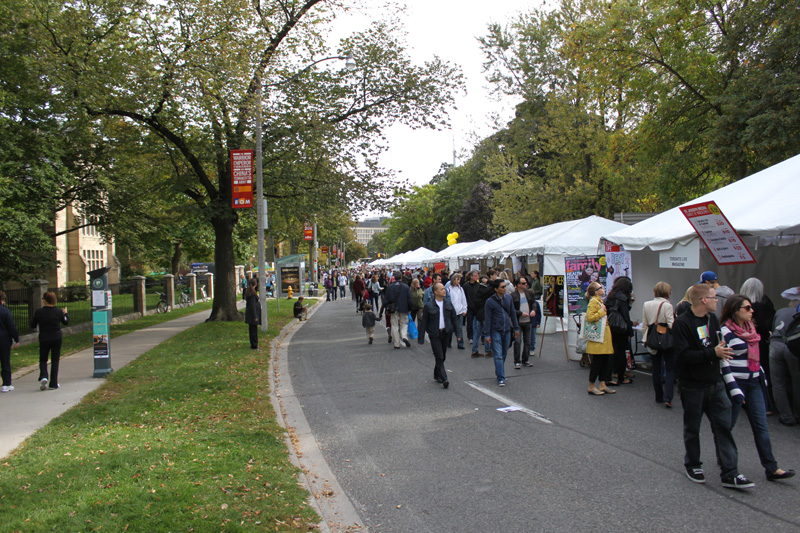
University Avenue was closed down for the festival.
“The notion of saying, ‘What’s the ROI of social media?’ is, at its broadest sense the right notion. But it’s the wrong question. You may as well ask what the ROI of putting your pants on every day is. You know there’s a value to it, but it’s hard to measure. It’s about what specific objectives we’re setting out, how we measure against those objectives, and how those all lead to a better reputation for the company, increasing market share, increasing excitement about the brand.”
Scott Monty, head of social media at Ford, in an interview with Marketing Magnified eJournal, August 2010